
 English
 中文
中文 Русский язык
 한국어
한국어
The difference between ball valve and butterfly valve

 by admin
Ball valves and butterfly valves are two commonly used valves in industrial piping systems. The main differences are as follows:
1. Design and Mechanism:
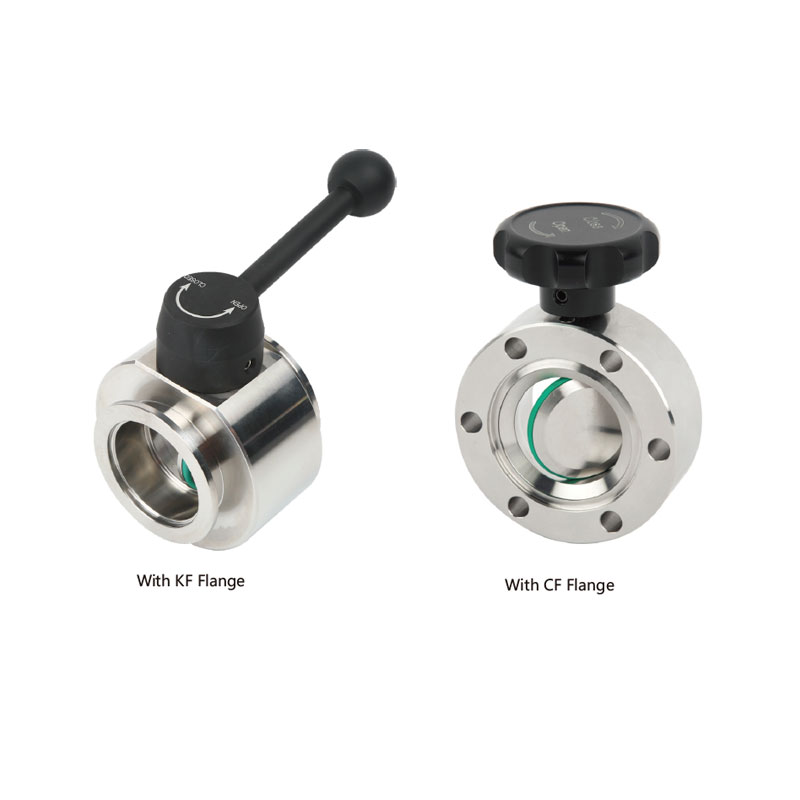
Ball Valve: Features a spherical ball with a bore through it. Rotating the handle 90 degrees aligns the bore with the flow or blocks it.
Butterfly Valve: Utilizes a thin, circular disc mounted on a rotating shaft. The disc turns parallel to the flow when open and perpendicular when closed.
2. Performance comparison
|
characteristic |
Ball valve |
Butterfly valve |
|
Sealing performance |
Excellent (low leakage rate, soft seal can reach zero leakage) |
Good (easy to leak under high pressure, depends on the valve seat material) |
|
Pressure range |
High (for high pressure systems, e.g. 10-100 bar) |
Low (typically ≤10 bar, high pressure models up to 50 bar) |
|
Temperature range |
Wide (-200℃ to 500℃, depending on the material |
Limited (-40℃ to 200℃, rubber valve seat is prone to aging) |
|
Flow resistance |
Small (approximately straight pipe when fully open) |
Large (disc obstructs flow) |
|
Switching speed |
Fast (90° rotation is enough) |
Fast (similar to ball valve) |
3. Applications:
Ball Valve: Preferred for on/off control in high-pressure/temperature environments (e.g., gas lines, industrial processes).
Butterfly Valve: Suitable for large-diameter pipelines (e.g., water supply, HVAC) and moderate throttling, though not ideal for precise flow control.
4. Flow Characteristics:
Flow control characteristics: While both valve designs are capable of performing on/off operations and modulating functions, ball valves are generally preferred for precise flow adjustment applications due to their superior flow control capabilities. Butterfly valves are inherently limited to two connection points, whereas ball valves offer greater versatility with the ability to accommodate multiple flow pathways through additional ports.
5. Pros and Cons
| Ball valve | Butterfly valve |
| Advantages: - Tight seal, high pressure resistance - Labor-saving operation - Long service life (metal seal can reach more than 100,000 times) |
Advantages: - Compact structure and light weight - Low cost (about 1/3-1/2 of ball valve) - Suitable for large diameter |
| Disadvantages: - Complex structure and high cost - Large diameter ball valves are large in size and weight |
Disadvantages: - Seals are prone to wear - Torque is high under high pressure - Seats are prone to failure under high temperature |