
 English
 中文
中文 Русский язык
 한국어
한국어
How to Avoid Contamination with the Right Sanitary Tube Fittings

 by admin
If you process food, dairy, beverages, pharmaceuticals, or biotech products, you already know that contamination is not a matter of if—it is a matter of when. And more often than not, the source of that contamination is not the product itself. It is the path it travels through.
Sanitary tube fittings are the most vulnerable points in any processing line. They are where flow changes direction, where connections are made, where seals are compressed, and where product can stagnate. Each fitting is a potential entry point for bacteria, a possible site for biofilm formation, and a place where cleaning chemicals may fail to reach.
Most contamination events in sanitary systems do not happen because the product was bad. They happen because the fittings were wrong—wrong material, wrong surface finish, wrong design, or wrong installation. Choosing the right sanitary tube fittings is not just about making a connection. It is about protecting your product, your process, and your reputation.
Here is what you need to know to avoid contamination from the start.
Where Contamination Actually Comes From
Before you can choose the right sanitary tube fittings, you need to understand where contamination risks hide. They are not always obvious.
Dead legs are sections of piping where flow is restricted or nonexistent, allowing product to sit idle. These pockets are notoriously difficult to clean and disinfect, making them prime locations for microbial growth. Even a short dead leg can become a persistent contamination source if the fitting design does not eliminate it.
Surface roughness is another invisible risk. A rough interior surface has peaks and valleys where bacteria can attach, product can accumulate, and cleaning chemicals cannot reach. The rougher the surface, the harder it is to clean—and the easier it is for biofilm to form.
Crevices and gaps at connections—whether from poor welding, misaligned gaskets, or threaded joints—create tiny spaces where fluid can collect and stagnate. These crevices are nearly impossible to clean thoroughly and become reservoirs for contamination.
Gasket degradation is another common source. Seals that deteriorate, extrude under pressure, or trap product residue can introduce particulate contamination or become breeding grounds for bacteria.
The good news is that each of these risks can be addressed through careful selection of sanitary tube fittings. The bad news is that many buyers overlook them until it is too late.
Surface Finish: The Single Most Important Detail
If there is one specification that separates quality sanitary tube fittings from the rest, it is surface finish.
Measured as Ra (roughness average), surface finish describes how smooth the interior surface is. A lower Ra means fewer places for bacteria to hide and easier cleaning. For most food and beverage applications, a 32 Ra finish is cost-effective and suitable. For pharmaceutical and stricter food processing, a 20 Ra finish offers improved hygiene. For the strictest sanitary standards and critical applications, a 15 Ra finish is preferred for its exceptional smoothness and resistance to bacterial growth.
The ASME BPE standard, widely used in bioprocessing and pharmaceutical applications, specifies SF1 (20 Ra mechanical polish) and SF4 (15 Ra with electropolish). Electropolishing goes beyond mechanical polishing—it removes a microscopic layer of metal, eliminating surface imperfections and improving corrosion resistance. The result is a surface that is not only smoother but also more passive and less prone to contamination.
When you evaluate sanitary tube fittings, always confirm the Ra value and ask how it is measured. A supplier who cannot answer these questions probably cannot deliver consistent quality.
Material Selection: 304 vs 316L and Why It Matters
The material of your sanitary tube fittings directly affects contamination risk—not just from corrosion, but from the surface integrity that corrosion compromises.
304 stainless steel is the most common grade and offers good corrosion resistance for many applications. It is suitable for general food processing where exposure to chlorides and aggressive cleaning agents is limited.
But 316L stainless steel contains molybdenum, which significantly improves resistance to chlorides and corrosive media. In applications involving frequent CIP cycles, salt exposure, acidic products, or pharmaceutical processing, 316L is the superior choice. The low carbon content in 316L also reduces the risk of intergranular corrosion after welding—a critical detail when fittings are permanently installed.
Why does this matter for contamination? Corrosion creates pitting and surface irregularities. Those irregularities become sites for bacterial attachment and biofilm formation. A fitting that corrodes is a fitting that contaminates.
For most sanitary applications—especially in food, dairy, beverage, pharmaceutical, and biotech—316L stainless steel is the safer long-term investment. The cost difference between 304 and 316L is modest compared to the cost of a contamination event.
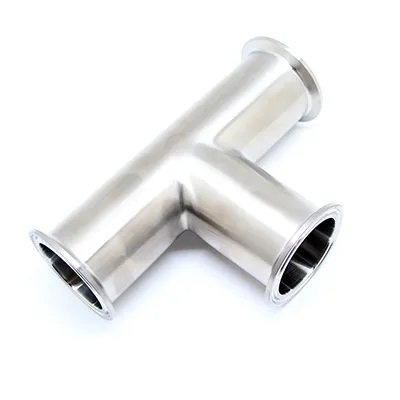
Design That Eliminates Dead Legs and Crevices
The geometry of your sanitary tube fittings matters as much as the material.
Quality sanitary fittings are designed to limit potential entrapment areas where bacteria could accumulate. They eliminate sharp corners, minimize dead spaces, and ensure smooth flow paths. A well-designed fitting allows fluid to flow through without stagnation and cleaning chemicals to reach every surface.
Connection type is a critical design decision. Threaded fittings create crevices between mating threads where fluid can collect and bacteria can grow. Sanitary fittings avoid this problem by using clamp connections (like Tri-Clamp) or welded connections. Clamp fittings allow for easy disassembly and inspection, while welded fittings provide permanent, crevice-free connections for systems that do not require frequent disassembly.
For welded connections, proper technique is essential. Poor welding—misalignment, incomplete penetration, lack of gas shielding—creates crevices and surface irregularities that become contamination sites. Automatic orbital welding is the preferred method for pharmaceutical and high-purity applications because it delivers consistent, repeatable results.
The goal is simple: a fitting that has no place for product to hide and no place for bacteria to grow.
Gaskets and Seals: The Overlooked Contamination Source
Gaskets are the weakest link in any sanitary fitting assembly—and the most frequently overlooked source of contamination.
A gasket that does not seal properly allows product to leak out or contaminants to leak in. A gasket that extrudes under pressure creates crevices where product can accumulate. A gasket that degrades over time can shed particles into the product stream.
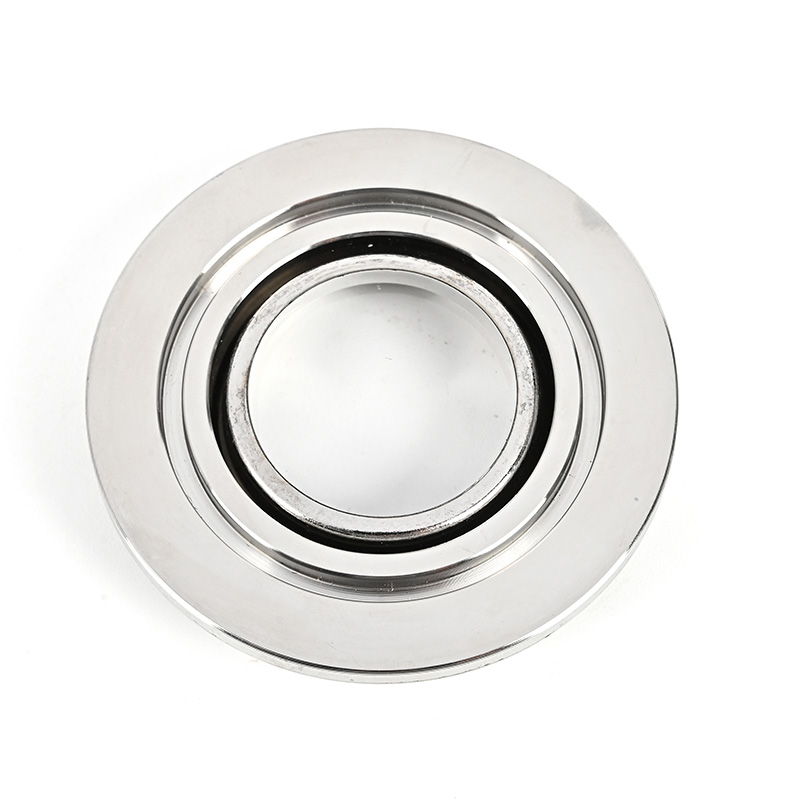
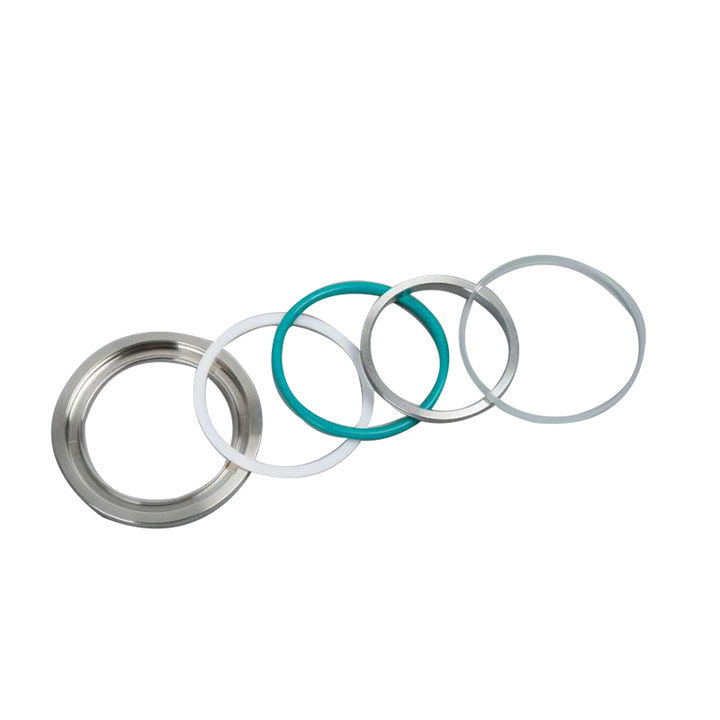
Quality sanitary tube fittings use food-grade or pharmaceutical-grade seal materials—typically EPDM, silicone, or PTFE—that are designed to withstand the temperatures, pressures, and chemicals of CIP and SIP processes. The gasket should sit flush with the interior surface of the fitting, creating a smooth, continuous flow path with no gaps or protrusions.
Some advanced fitting designs integrate the gasket into the fitting itself, eliminating the risk of misalignment and reducing the potential for user contact contamination. These designs are worth considering for applications where sterility is critical.
When evaluating sanitary tube fittings, ask about the gasket material, its temperature and chemical resistance, and how the seal performs under your specific process conditions. A fitting is only as good as the gasket that seals it.
Standards and Compliance: What Your Auditor Will Check
If you process food, dairy, beverage, or pharmaceuticals, your sanitary tube fittings will be inspected. Not just by your own quality team, but by regulators, customers, and third-party auditors.
Standards like ASME BPE, 3-A Sanitary Standards, and ISO exist to define what constitutes a hygienic fitting. They cover material specifications, surface finish requirements, dimensional tolerances, and documentation.
3-A standards are common in food, dairy, and beverage processing and require an interior surface finish of at least 32 Ra. ASME BPE is stricter and widely used in pharmaceutical and biotech applications, with requirements for 20 Ra or 15 Ra surface finishes and full material traceability.
When you purchase sanitary tube fittings, ask for material test reports and certification of compliance with the relevant standards. A supplier who provides these documents without hesitation is one you can trust. One who avoids the question is one you should avoid.
Summary
Contamination in sanitary processing is rarely a single-point failure. It is the cumulative result of small compromises—a slightly rough surface here, a poorly designed connection there, a gasket that does not quite seal. Each compromise is a risk. Each risk is a potential contamination event.
Choosing the right sanitary tube fittings is about eliminating those compromises before they become problems. It is about protecting your product quality, passing your audits, and keeping your customers confident in what you produce.
What to take away:
Surface finish directly affects cleanability—specify 20 Ra or better for critical applications.316L stainless steel offers superior corrosion resistance and reduces contamination risk.Dead-leg-free design eliminates stagnation points where bacteria can grow.Proper gasket selection and fit prevents seal-related contamination.Standards compliance (3-A, ASME BPE) is non-negotiable for regulated industrie.Documentation and traceability provide proof of quality during audits.
Ready to Choose Sanitary Tube Fittings You Can Trust?
Whether you are designing a new processing line or replacing fittings in an existing system, the right sanitary tube fittings make the difference between reliable production and recurring contamination headaches.
Our team works with food, dairy, beverage, pharmaceutical, and biotech customers to specify fittings that meet their exact requirements—from material grade and surface finish to connection type and standards compliance. We provide full documentation, material traceability, and technical support to ensure your fittings perform as expected, from installation through years of service.